
WorldAnimalFoundation.org is reader-supported. When you buy through links on our site, we may earn an affiliate commission. Learn More
Deciding between a German Pinscher and a Doberman Pinscher is like comparing an underdog to a celebrity in the canine world. Despite their shared roots, which give them a lot in common, each breed brings its own unique set of traits to the table.
To someone not experienced in dog breed specifics, German Pinschers and Doberman Pinschers might look like twins at first glance. They boast similar sleek coat patterns, distinctive head shapes, and even comparable dispositions.
Originating from the same country, it’s easy to see why they could be mistaken for the same breed. Yet, when you take a closer look, the differences between a German Pinscher and a Doberman Pincher start to emerge, highlighting what makes each breed distinct.
Let’s dive into the details and discover what sets these strong, industrious dogs apart.
German Pinscher vs Doberman
Purpose and Ancestry
German Pinschers are like the seasoned guardians of the dog world, tracing their roots back to 18th-century Germany. Imagine them as the trusty sidekicks of stable owners, diligently keeping rats and other pests at bay. Their reliability and adaptability as all-around work dogs won them a solid fan base over the years.
Enter the Doberman, or as it’s also known, the Doberman Pinscher, sharing a slice of its family tree with the German Pinscher. The brainchild of Karl Dobermann, a German taxman from the late 1800s, the Doberman was bred to be the ultimate personal bodyguard: strong, fearless, and always on alert.
After Karl Dobermann’s time, the breed’s role expanded from personal protector to serving with distinction as police and military dogs, showcasing their versatility and bravery beyond their initial purpose.
Appearance

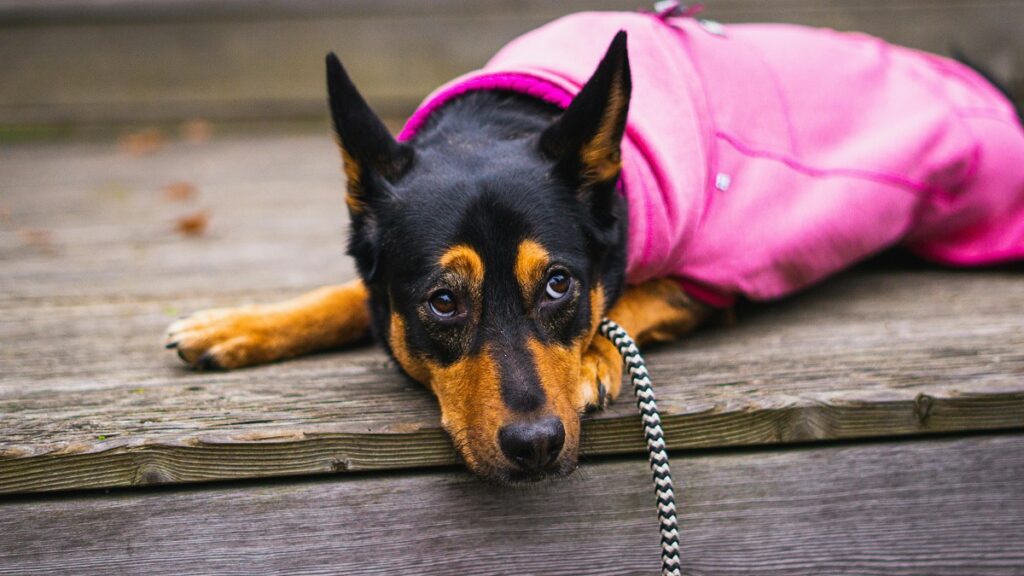
At first glance, you might mix up the German Pinscher and the Doberman, thanks to their strikingly similar looks. This isn’t too surprising, considering the Doberman’s breed was developed with a bit of German Pinscher in its genetic mix. This shared ancestry explains their comparable coat patterns and physique, although the German Pinscher is noticeably smaller.
German Pinschers are like the sporty, medium-sized athletes of the dog world, sporting shiny coats that come in a variety of colors. Think of them in stylish shades like black, blue, fawn (Isabella), and red, with chic accents in tan, red, or a combo of red and tan.
Their bodies are graceful and streamlined, with a waist that looks as if it’s been cinched in. Plus, their ears show more diversity, ranging from floppy to upright, giving them a distinct appearance compared to the Doberman, which is more often seen with erect ears.
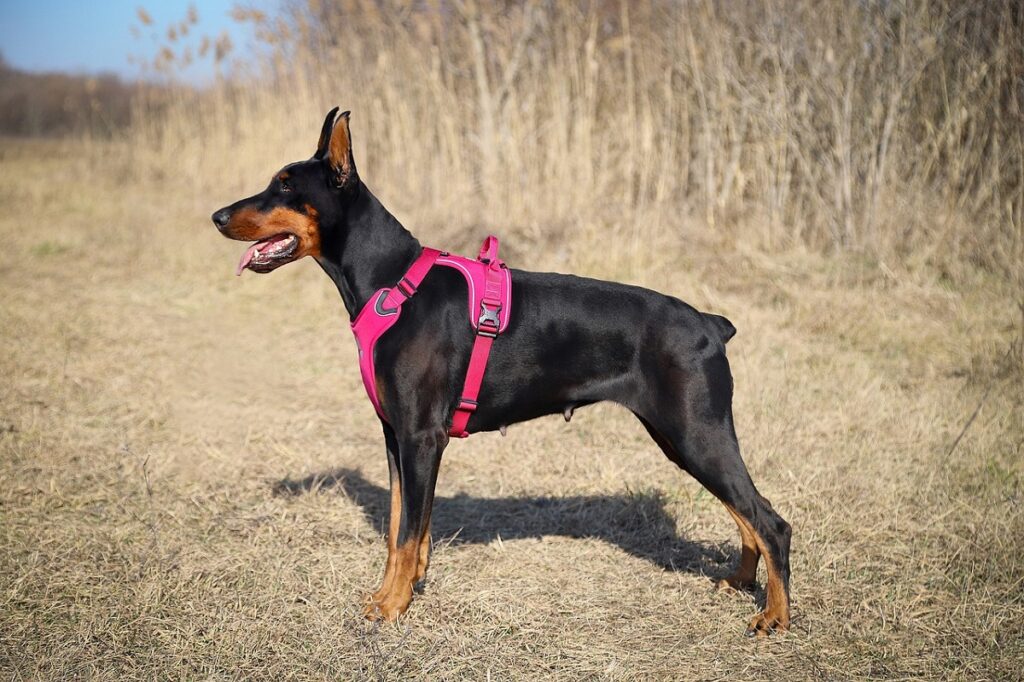
Speaking of Dobermans, they’re the taller, more robust siblings, yet still flaunt a sleek, muscular figure with that signature trim waistline. Their coats dazzle in five colors and combos—black and rust, blue and rust, red and rust, fawn (Isabella) and rust, with an extra-special white option. Unlike the German Pinscher, the Doberman doesn’t sport any official markings, according to the AKC.
Weight and Height
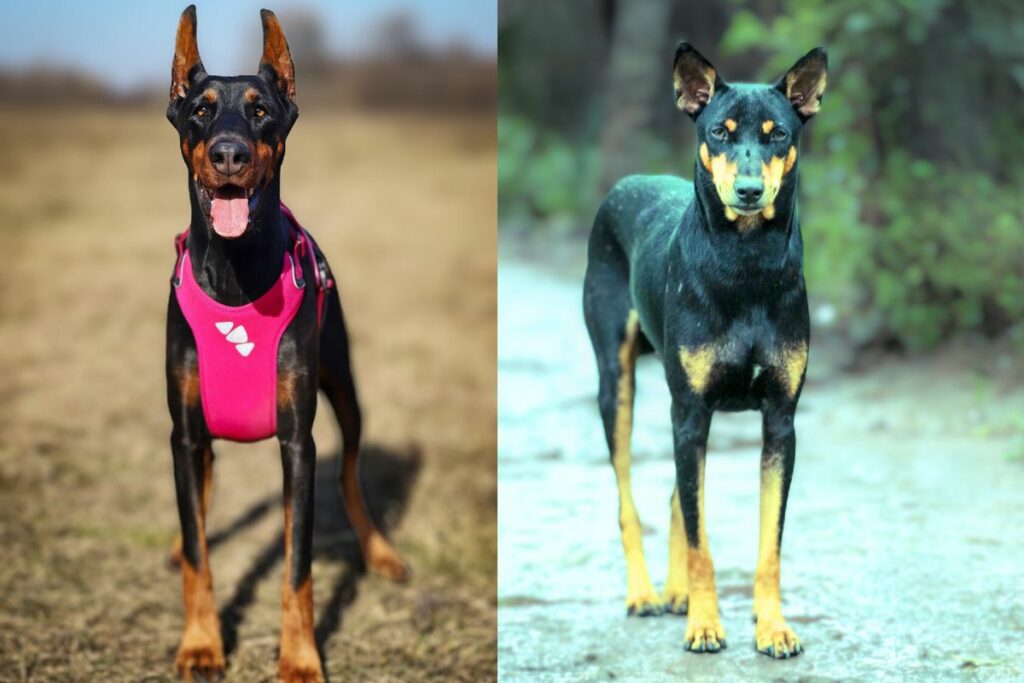
Spotting the difference between a Doberman and a German Pinscher is a no-brainer once you consider their size. The Doberman towers over the German Pinscher, with a notable difference in both height and weight.
For the Doberman, depending on whether it’s a male or female, it stands tall at 24 to 28 inches. In contrast, the German Pinscher is more petite, with a height range of 17 to 20 inches. When it comes to weight, the German Pinscher is lighter, tipping the scales at 25 to 45 pounds, while the Doberman boasts a heftier weight range of 60 to 100 pounds, gender playing a role in this as well.
Personality
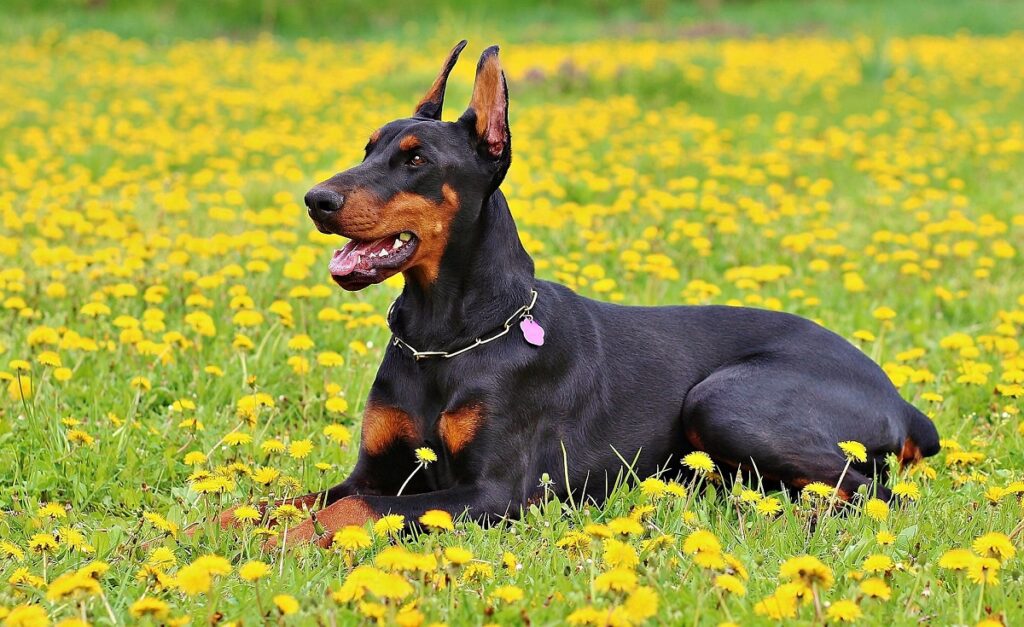
Dobermans were bred for protection, often showing less fear-based aggression but a higher tendency for stranger-directed aggression. Proper socialization and obedience training are crucial for a safe and well-adjusted Doberman, known for its loyalty, alert barking, and general friendliness towards other dogs.
German Pinschers, not bred for protection, are less wary of strangers. They are characterized by their strong prey drive, alertness to their surroundings, high energy levels, and deep affection for their family.
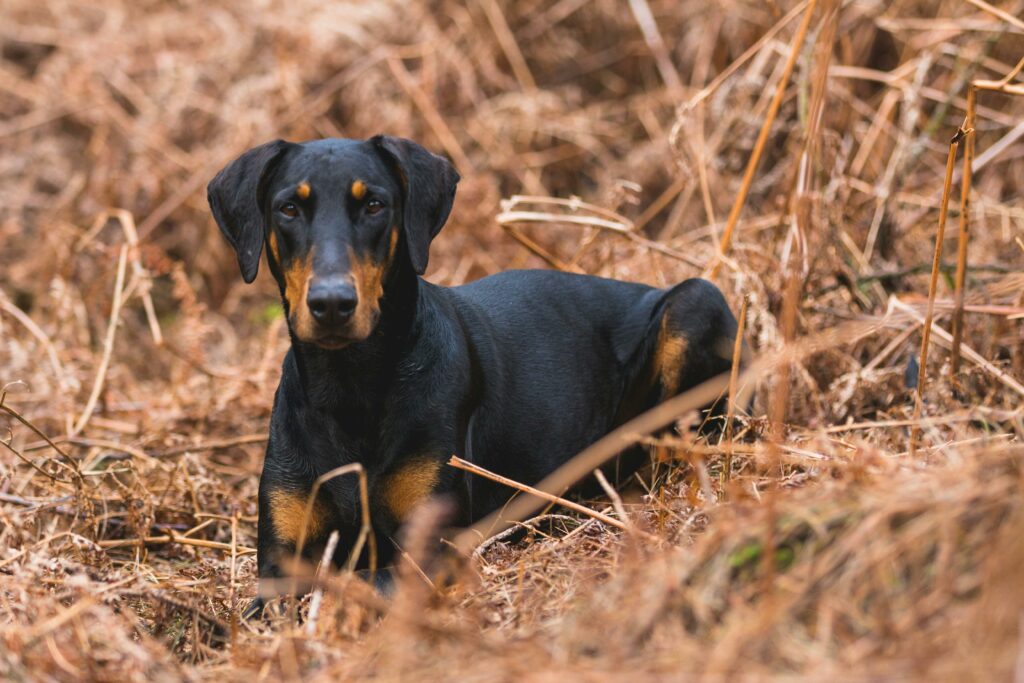
German Pinschers are lively and sharp, always tuned into their environment. Their devotion is unmatched, but without regular mingling, they might get a tad too protective.
These sprightly pups are full of energy and have a knack for chasing, which might be a bit much for first-time dog parents.
Dobermans share this spirited and industrious nature; only they come in a larger package. They’re incredibly loyal, always on the lookout to safeguard their home. With their sharp minds and swift bodies, they’re stars in obedience and doggy sports alike. Dobermans crave human connection and shouldn’t be left alone for too long.
Behavior
German Pinschers really shine in a family setting, especially when everyone, kids included, knows how to interact with them respectfully. Early introductions to other pets are key because of their strong chase instinct.
This breed is a match for those who’ve navigated the dog-owning world before, as their loving nature comes with a side of stubbornness. They’re perfect companions for the adventure-loving family, eager for any physical challenge, be it hiking or jogging.
Dobermans, on the other hand, are bundles of fun and fit seamlessly into family life, getting along famously with kids when properly introduced. Early socialization is just as crucial for them, ensuring they play nice with other pets and children.
They thrive in a loving, energetic household that can provide plenty of engagement and a bit of outdoor space to burn off that extra energy. Ideal for families ready to invest time in their social and physical well-being, a Doberman’s loyalty and zest for life are bound to enrich any home.
Health Problems and Lifespan
It’s a popular fact that often, the smaller the dog, the longer its lifespan. This rule applies to the comparison between the Doberman and the German Pinscher as well. Typically, a German Pinscher enjoys a life expectancy of 12 to 14 years, outliving the Doberman, which has an average lifespan of 10 to 12 years.
Throughout their lives, both the Doberman and the German Pinscher may face certain hereditary health issues common to their breeds.
Dobermans might encounter challenges such as hip dysplasia, various heart conditions, hypothyroidism, prostatic disease (especially in males), and von Willebrand’s disease, a type of bleeding disorder.
On the other hand, German Pinschers are also prone to hip dysplasia and heart disease, along with progressive retinal atrophy (which affects the eyes), von Willebrand’s disease like their Doberman cousins, and sometimes complications after vaccinations.
But, with the right mix of good nutrition and regular exercise, both breeds have the potential to lead long and happy lives!
Training and Exercise
German Pinschers respond well to positive training methods, benefiting from consistency and confidence-building exercises. These dogs are quick to learn, making group obedience classes both enjoyable and effective.
Essential for their development is early socialization with people and other pets, given their natural protective instincts. For those new to dog ownership, enlisting the help of a professional dog trainer can be a wise decision.
German Pinschers are little bundles of energy who love to move! They’re like the athletes of the dog world, needing plenty of exercise every day to stay chipper. Just walking them isn’t enough; they love to sprint and explore in a safe, enclosed space. To keep their minds as fit as their bodies, they also need fun challenges, especially if they come from a line of hardworking ancestors.
Dobermans, with their larger stature, also thrive on a clear routine and rules at home. Training them consistently helps manage their protective nature. For those new to dog parenting, sometimes calling in a pro trainer is the way to go.
Like their German Pinscher cousins, they’re not fans of boredom, so having tasks and routines is key for their happiness. Exercise is just as crucial for Dobermans; a simple stroll won’t cut it. They love to run free in a secure area and dig activities like agility courses. They’re also great companions for outdoor adventures, needing both physical and mental activities to bond with their humans and stay content.
Grooming
Grooming German Pinschers is straightforward, thanks to their short coats. Regular brushing minimizes shedding and enhances coat shine by distributing natural oils. However, limit baths to avoid dry skin. Monthly nail trims are advised, adjusted for their activity.
Dobermans also enjoy low-maintenance grooming. A weekly brush reduces shedding and keeps the coat clean and shiny. Like their Pinscher cousins, too much bathing can dry out their skin. Their nails typically need a monthly trim, depending on how active they are.
Conclusion
When comparing the German Pinscher and the Doberman, it’s fascinating to see the spectrum of traits within the Pinscher family, including the smaller Miniature Pinscher. Training German Pinschers and Dobermans reveals their intelligence and versatility among dog breeds.
Both have earned their place as esteemed guard dogs, with the Doberman’s notable service during World War II highlighting its bravery and loyalty. Each breed brings its unique qualities to the table, offering a range of options for those looking to welcome a pinscher into their home.