
prototype PCB assembly process scaled for mass production
Prototype PCBs bridge the gap between theoretical schematics and mass production, allowing manufacturers to experiment with and improve designs early in the development cycle. However, preparing prototypes for mass production involves overcoming a series of unique technical and design challenges. This article will explore the prototyping-to-production transition, highlighting the main differences between these two distinct phases of PCB production and the steps that must be taken to ensure seamless, error-free migration from one stage to another.
The prototyping phase typically involves producing a limited number of prototype boards for testing purposes. This allows designers to rapidly iterate and make necessary adjustments to their PCB designs, accelerating the product development cycle and reducing overall time-to-market. It also offers a cost-effective solution for businesses with limited capital.
A key difference between prototyping and production is the fabrication process. Unlike prototypes, which prioritize fast turnaround over superior quality, volume production demands repeatable performance and durability across longer operating lifecycles. To meet these needs, production PCBs leverage advanced materials and fine-tuned fabrication techniques for greater stability and reliability. Some production manufacturers even offer specialized capabilities like HDI and rigid-flex PCBs for highly demanding applications.
Likewise, when it comes to prototyping PCB assembly, choosing an assembler with extensive experience in handling complex, high-density layouts and advanced SMT parts is crucial. A qualified partner will be familiar with common fabrication standards, ensuring accurate placements and consistent solder joints for the highest possible quality. Assemblers with fast-turnaround manual assembly capacities are also able to accommodate design changes quickly, further enhancing overall productivity and lowering costs.
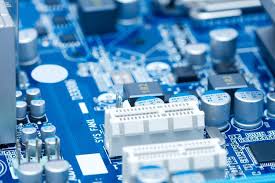
How is the prototype PCB assembly process scaled for mass production?
Once assembled, prototypes undergo thorough visual inspection and a variety of electrical tests. This ensures that the boards are free of defects, such as misaligned components or damaged traces. It also identifies any issues that could affect the functioning of the finished device. Functional testing simulates real-world operating conditions, ensuring that the device will work as intended and meeting all applicable performance and safety standards.
Finally, if the board passes all these checks, it is ready for volume production. For this stage, it is critical to coordinate with your chosen production manufacturer on specifications, quality protocols, volumes aand lead times early in the design process. This helps minimize errors and ensures that your final devices are delivered on-time, error-free and within budget.
A prototype PCB is typically a low-volume, small-batch version of the final PCB, made using the same materials, assembly methods, and testing procedures that will be employed in mass production. The goal of prototype pcb assembly is to ensure that the final product will work as intended before committing to expensive full-scale manufacturing.
The first step in the process is the creation of the PCB design. Engineers and designers use specialized CAD (Computer-Aided Design) software to map out the circuit and determine the layout of the PCB. This design includes the placement of components, routing of traces, vias, and other essential features.